
Model guides
Fable 5.2 vs Opus 5.5: Choose by Accepted Task Cost
Use Opus 5.5 as a starting point for routine coding and knowledge work; evaluate Fable 5.2 when a difficult task justifies escalation. Compare the cost of accepted results, including retries and review, rather than token prices alone.
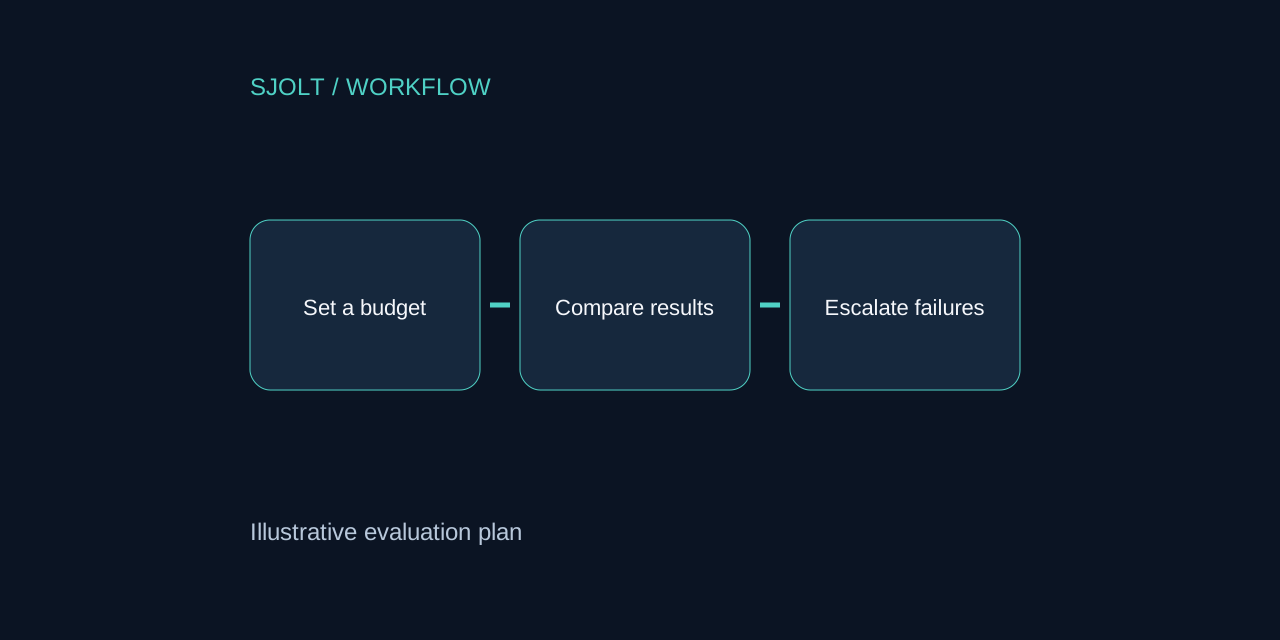
Use Opus 5.5 as a starting point for routine coding and knowledge work; evaluate Fable 5.2 when a difficult task justifies escalation. Compare the cost of accepted results, including retries and review, rather than token prices alone.
This is a decision framework based on official documentation and illustrative arithmetic. It is not a hands-on ranking. Fable access is covered separately so this page can focus on the comparison.
The documented differences that matter
Anthropic’s Fable launch recommendation is to begin most coding and knowledge tasks with Opus 5.5 and move to another model as the workload warrants. That recommendation is more useful than assuming the newest model should handle every request.
| Standard Claude API | Fable 5.2 | Opus 5.5 |
|---|---|---|
| Input / million tokens | $8 | $4 |
| Output / million tokens | $40 | $20 |
| Default effort | high | medium |
These are Anthropic’s standard API rates and documented defaults, checked November 11. Fast mode, cache operations and batch processing have separate rules. The figures are not SJolt prices. Leaving defaults unchanged also means you are not holding effort constant between the two models.
A transparent break-even example
Suppose a task uses 20,000 uncached input tokens and 5,000 billable output tokens. At the standard rates above, Fable costs 0.02 × $8 + 0.005 × $40 = $0.36; Opus costs 0.02 × $4 + 0.005 × $20 = $0.18. This assumes identical token totals, which real runs may not produce. It excludes tools and other charges.
If three Opus attempts and one Fable attempt reach the same accepted deliverable, that hypothetical attempt spend is $0.54 versus $0.36. If each succeeds on the first attempt, it is $0.18 versus $0.36. Neither scenario is a measured success rate. They show exactly which observation your trial needs: how many complete attempts produce an acceptable result.
For each task and model, record:
all input/output/cache usage
all retries and tool costs
review time and corrections
accepted: yes / no
reason rejected or escalated

Cost per accepted task = total trial spend / accepted tasks
If accepted tasks = 0, report no accepted result; do not divide by zero.
A failed attempt still belongs in the denominator’s associated spend. Count abandoned runs, not only the successful transcript you choose to present. Report human review time separately unless your team has an agreed monetary conversion; otherwise a guessed hourly rate can dominate the comparison.
Build a paired trial before naming a winner
- Select several tasks from the actual queue: a narrow bug fix, a source-grounded document, and one genuinely difficult multi-file change.
- Freeze inputs and acceptance criteria. Keep a clean copy of each task so one model does not benefit from the other’s patch.
- Choose an effort policy deliberately. Compare both practical defaults and, if useful, a separately labeled matched-effort condition.
- Cap attempts and total spend. Keep tool permissions and available context equivalent where the services support them.
- Have a reviewer inspect outputs without relying on model-written self-evaluations. Record failures as carefully as successes.
For the document task, provide a short product specification with a deliberately unresolved detail. A good answer should preserve that uncertainty rather than turn it into a fabricated feature. For the coding task, include one known regression case and one requirement that must remain unchanged. Those checks are more relevant than whether the answer sounds decisive.
Use a task-level record rather than one aggregate score. A model that handles summaries well but repeatedly breaks a public interface may still be useful in one role and unsuitable in another. When the sample is small, publish the actual task count and describe the observations without claiming a universal winner.
Escalate with a concise failure packet
An escalation should carry the original objective, relevant files, observed failure and the acceptance case that did not pass. Do not hand over a long conversation full of failed hypotheses unless those details are necessary. Ask the stronger candidate to diagnose the unresolved issue first; otherwise it may spend its budget reproducing already discarded work.
Escalation packet
Objective: preserve the public parser contract.
Observed failure: escaped delimiter splits into two fields.
Evidence: failing input, expected output, actual output.
Already tried: local tokenizer replacement.
Required deliverable: smallest corrective patch and regression check.
Also set a stop rule for the escalation. If the real blocker is an unavailable specification or a contradictory requirement, switching models cannot supply the missing authority. Return the ambiguity to the owner and resume after it is resolved.
Apply the comparison to a supported SJolt route
SJolt’s reviewed catalog lists Fable 5.2 and Opus 5.5 through separate native Messages routes. Check both model pages for SJolt token rates and request details instead of applying the official-price table to a different service. Use the trial worksheet with either route and keep their model identities, defaults, and usage records separate.
- SJolt Fable 5.2 and current token rates
- SJolt Opus 5.5 and current pricing
- Fable release and access guide
For a creative pipeline, keep factual brief validation separate from image generation. Compare reasoning models on whether the brief preserves required product details; compare image models on the final visual acceptance criteria. Combining those stages into one score makes it difficult to identify where an improvement came from.
Sources & further reading
Take the next idea into production.
Explore the models, test a workflow in the playground, and use the same request in your application.